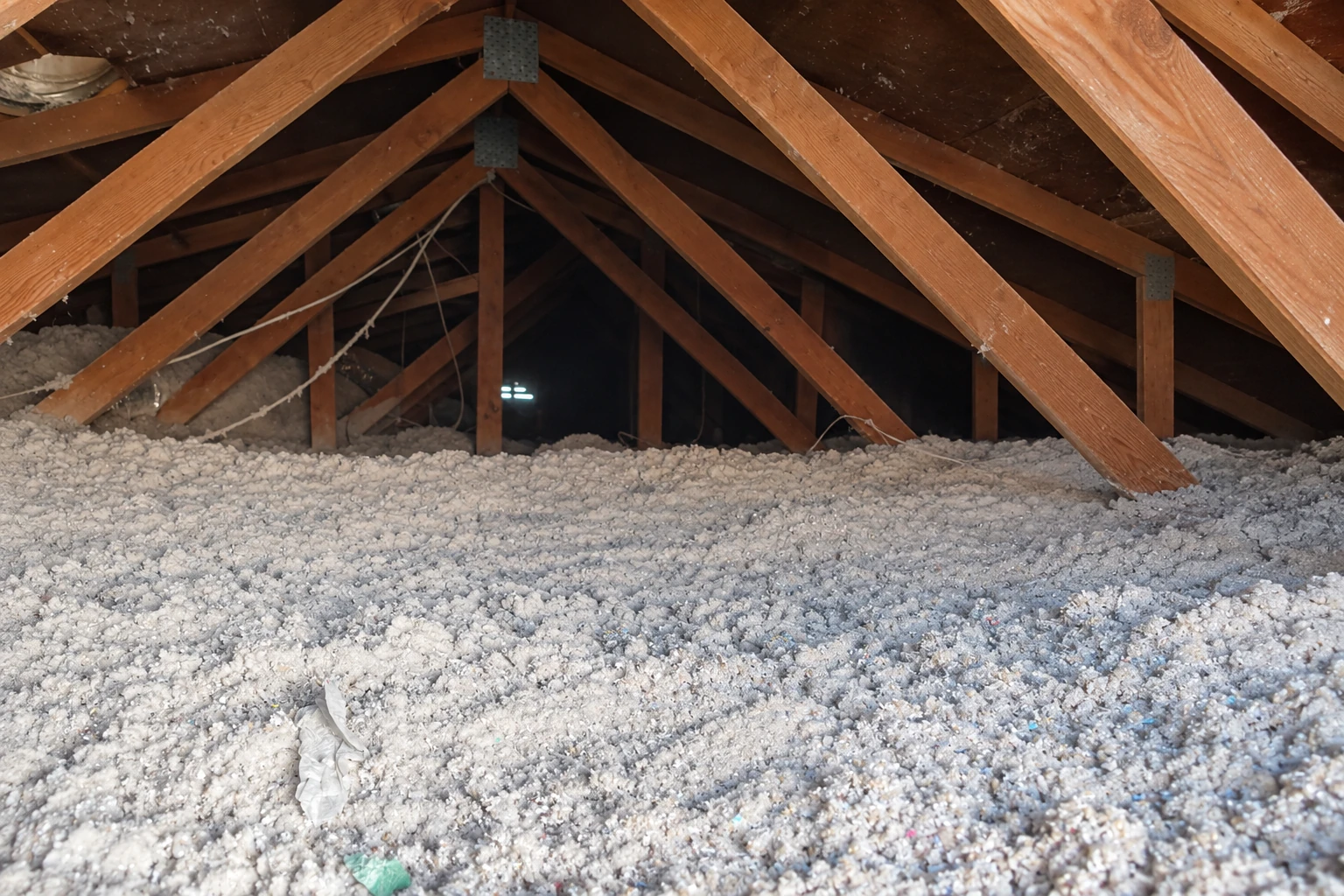
Older houses with gappy framing
In older houses, air slips through gaps in the framing and old wiring holes, and loose fill just sits on top of them. Foam fills those gaps as it goes on.
Hot upstairs, cold floors or a power bill that keeps climbing? We seal the leaks and insulate in one pass.
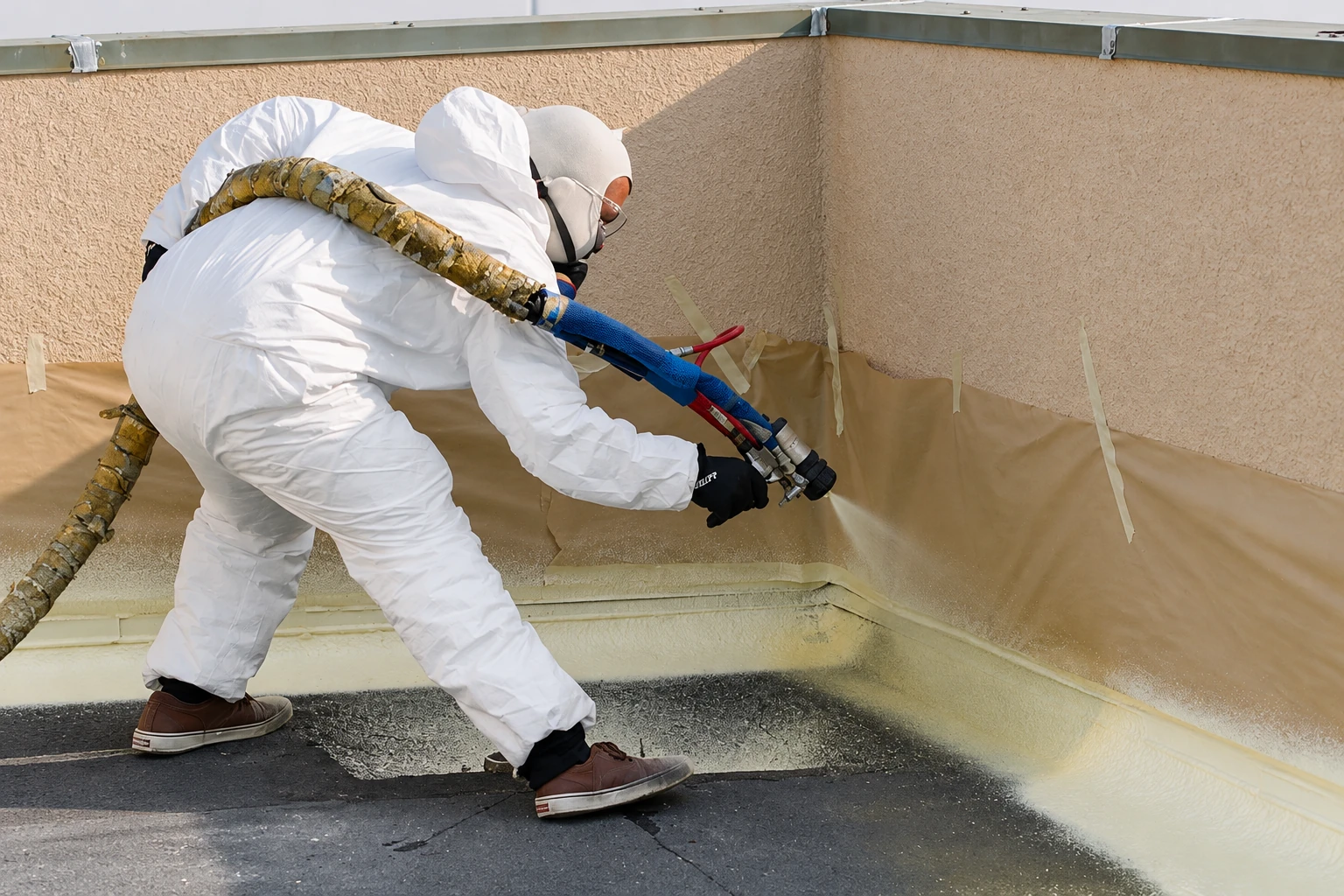
Spray foam insulation in Springfield is foam our crew sprays onto rooflines, walls and rim joists. It seals air leaks and insulates at the same time, so one product stops the drafts and holds the heat in.
Most calls start with a hot upstairs bedroom, a cold floor over the garage or a power bill that climbs every winter, and the attic usually explains it. The price moves with how much area we're covering, whether open-cell or closed-cell fits, and what has to come out or get fixed first. The schedule turns on the weather, on any roof leak that needs fixing before we start, and on when your family can be away from the house. The estimate is where you get your own number.
I come out for every estimate myself and look over the attic or crawl space before we price anything, so the number covers what's actually up there and not a guess from the driveway.
If there's a roof leak or a wet crawl space, I'll tell you to fix that first and wait, because I'd rather lose the job than sell you one that won't hold up.
I started this business in 2017 after years of crawling through attics for a property management company and fixing the same cold rooms that should've been done right the first time.
I start by looking the space over, checking how many inches of old insulation are already up there and looking for roof leaks, wet spots and droppings that have to be dealt with first. Next I tell you whether open-cell or closed-cell fits the space and why, and we work out with you where everyone stays while the foam cures. On the day, our crew covers what needs protecting, pulls out old material that's soaked or dirty, and goes after the edges and the gaps around can lights, pipes and the attic hatch first, since that's usually where whoever did the last job ran out of patience. Then we spray an even coat across the rest, and I'm on most jobs or checking them before we pack up.
Foam isn't the answer for every house, and I'll say so. It costs more because it seals air while it insulates, and that pays off when the ductwork lives in the attic. If it doesn't, sealing the gaps and topping up with blown-in insulation, loose fill blown in through a hose, usually wins, and our attic insulation page walks through that option.
In older houses, air slips through gaps in the framing and old wiring holes, and loose fill just sits on top of them. Foam fills those gaps as it goes on.
The rim joist, the board that sits on top of the foundation wall, leaks air. Foam seals and insulates it in one step, while batts let damp air through and invite mold.
Cold floors over the garage usually come from air moving through the floor, not just thin insulation. Foam stops that air, which batts stuffed between the joists rarely do.
Cathedral ceilings, knee walls and shallow roof bays don't leave room for deep loose fill. Foam does the work in the depth those spaces actually have.
Send the form and we'll reply within one business day to set a time. I'll come out, look the space over and give you a free estimate on site, with no pressure to book.
Note the areas you want insulated, like the attic, the room over the garage or the crawl space, so I know where to start looking when I come out.
Tell us if the house has bath fans, a kitchen vent or a fresh air ventilator, because how fresh air gets in matters once the leaks are sealed.
We're licensed and insured, and the person pricing your job is the one who crawled through your attic, so what you hear at the estimate is what the crew shows up to do.
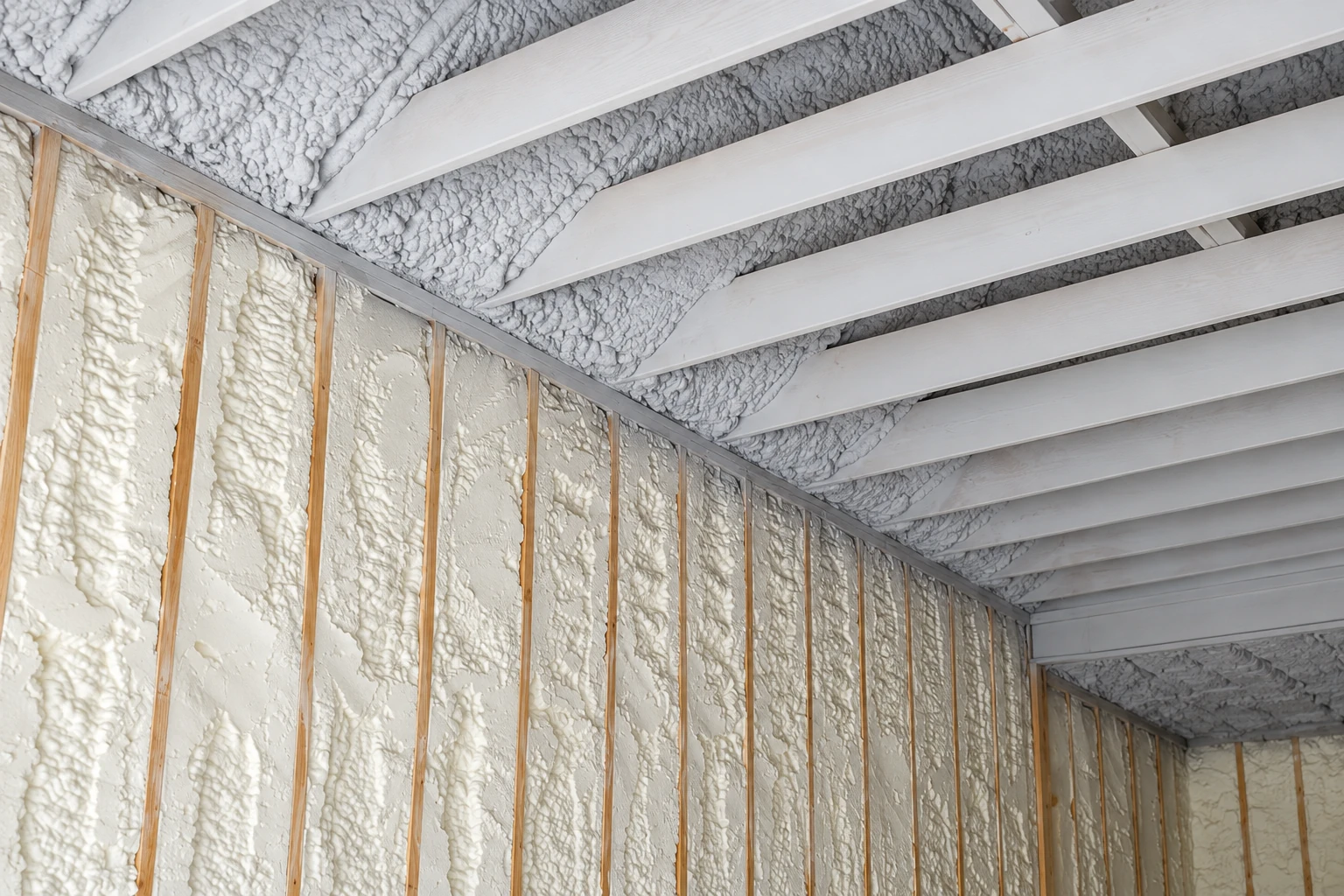
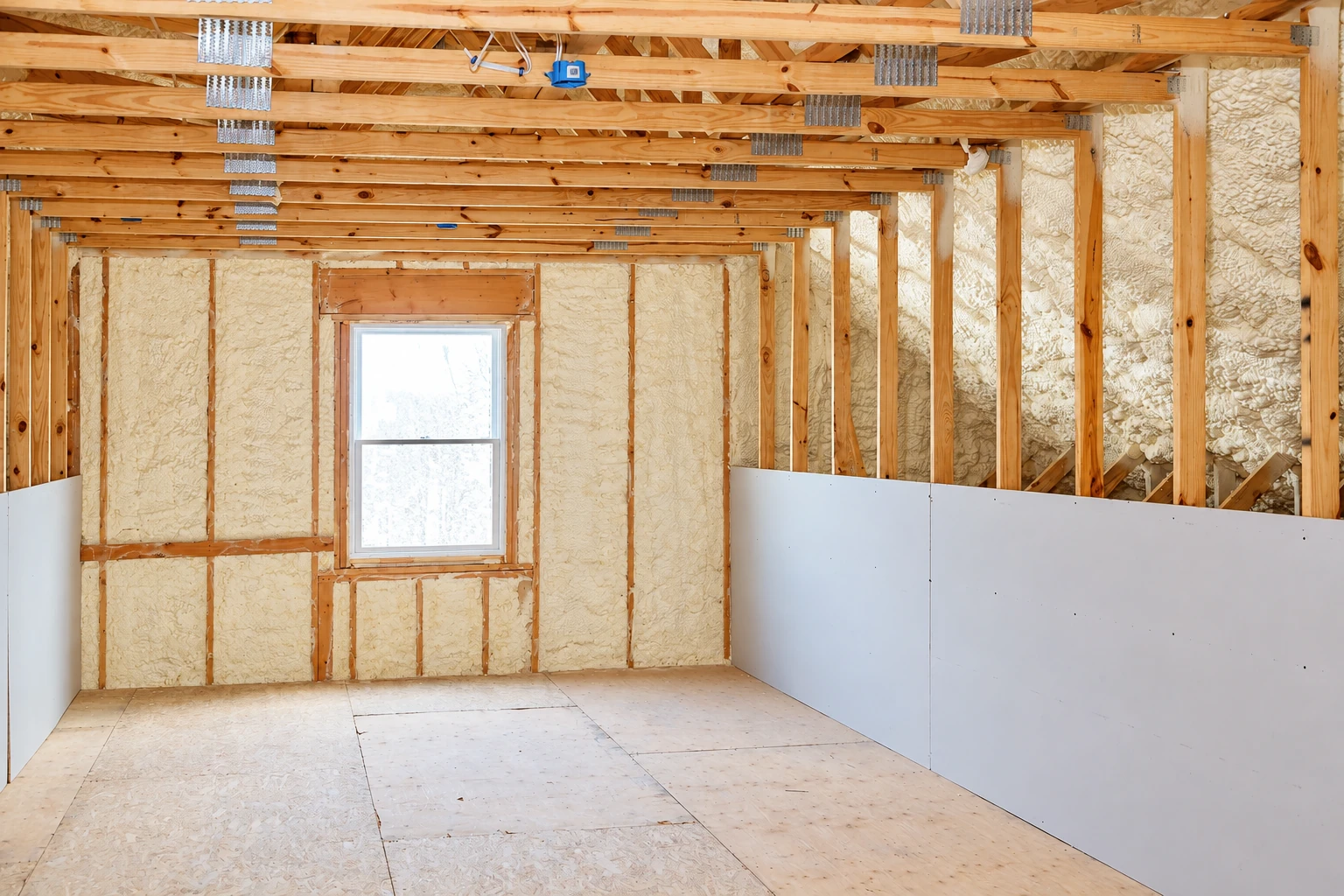
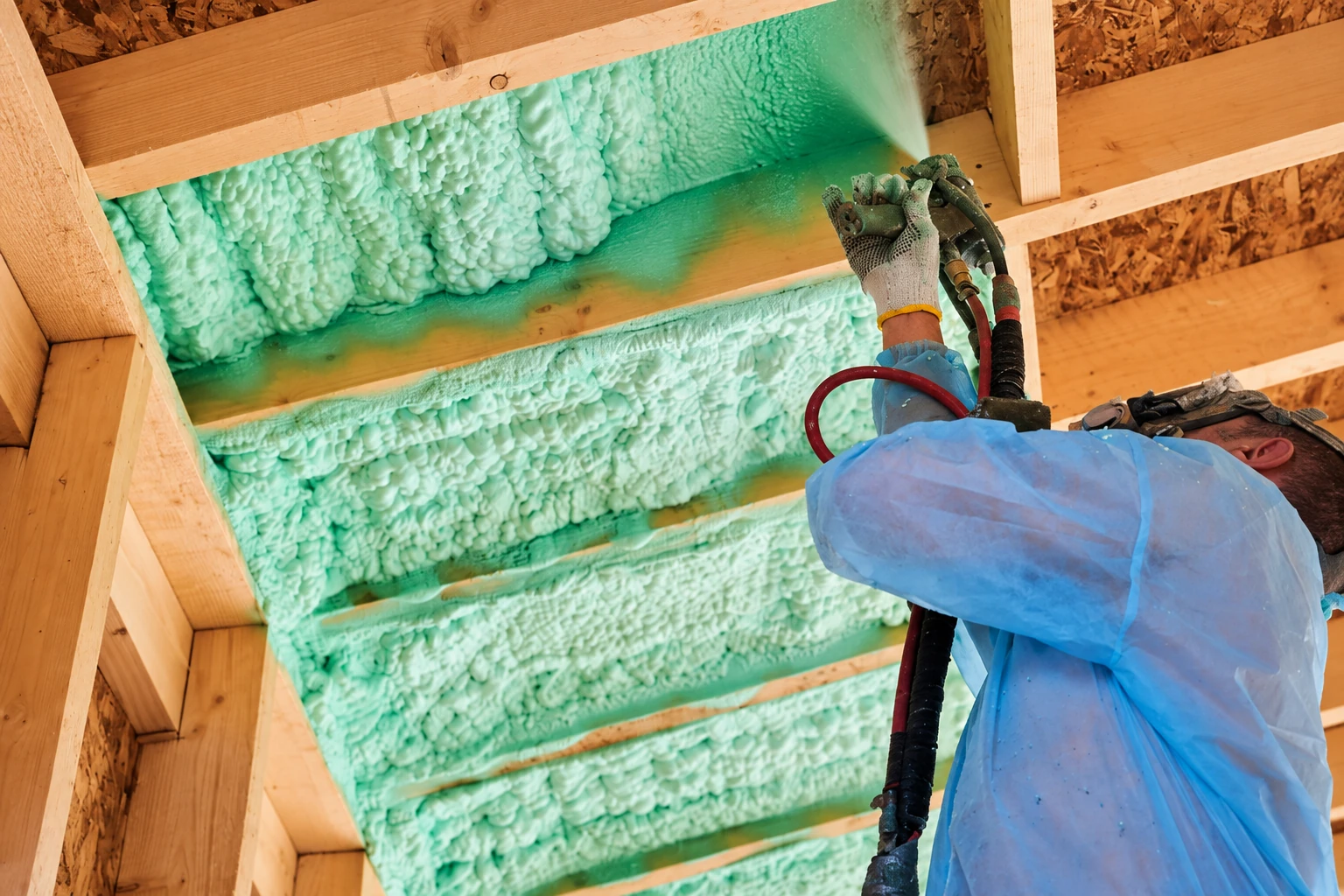
These example photos show open-cell and closed-cell foam on rooflines, walls and rim joists, the kinds of layouts we can talk through at your estimate.
Here's what people ask before they book spray foam, from which foam to pick to how long you'll be out of the house.
Closed-cell does more per inch and open-cell costs less, so the space decides. Closed-cell foam, the dense kind that blocks moisture, has almost twice the R-value, how well it slows heat, of open-cell at the same thickness, and it may also slow vapor, resist water and help strengthen walls and roofs. I'll tell you which one fits your space and why.
Plan on at least 24 hours away, starting when spraying begins, and book a place for the kids and pets too. Coming back waits until the foam has cured and the house has been aired out and cleaned, and that re-entry time can run longer on some jobs, so we tell you when it's fine to come home.
It could, because foam seals so well that a house can end up below the fresh air levels building codes require. Some homes may need a permanent ventilation system, so ask a design professional about yours. Illinois's homeowner guidance says that before insulating, fresh air needs a controlled way in, leaks get sealed and moisture can't build up, since a house that's too tight can lead to mold.
Spray foam insulation in Springfield usually costs about $2,700 to $10,500 per job, and that's the going range for the work around here, not our price. Ask whether any quote, ours included, covers the protective layer the foam trade group recommends putting over indoor foam. Your own number comes after I've been up in the space.
The city's permit list doesn't settle it either way. Springfield's Building & Zoning Department issues permits, and its list names work like building, roof and fence jobs but not insulation, while the city's Building Division handles inspections and permit reviews. We check with the office that covers your address before we start, and if a permit's needed, we take care of it.
The right time is when the temperature and humidity suit the foam, since both play a critical role in how it cures. Each foam maker gives its own guidance, so we plan the day around the weather and the maker's instructions. If the weather turns wrong, I'd rather move the day than spray in it.
We're open seven days a week into the evening, so call (217) 210-0709 or send the form whenever it suits you.