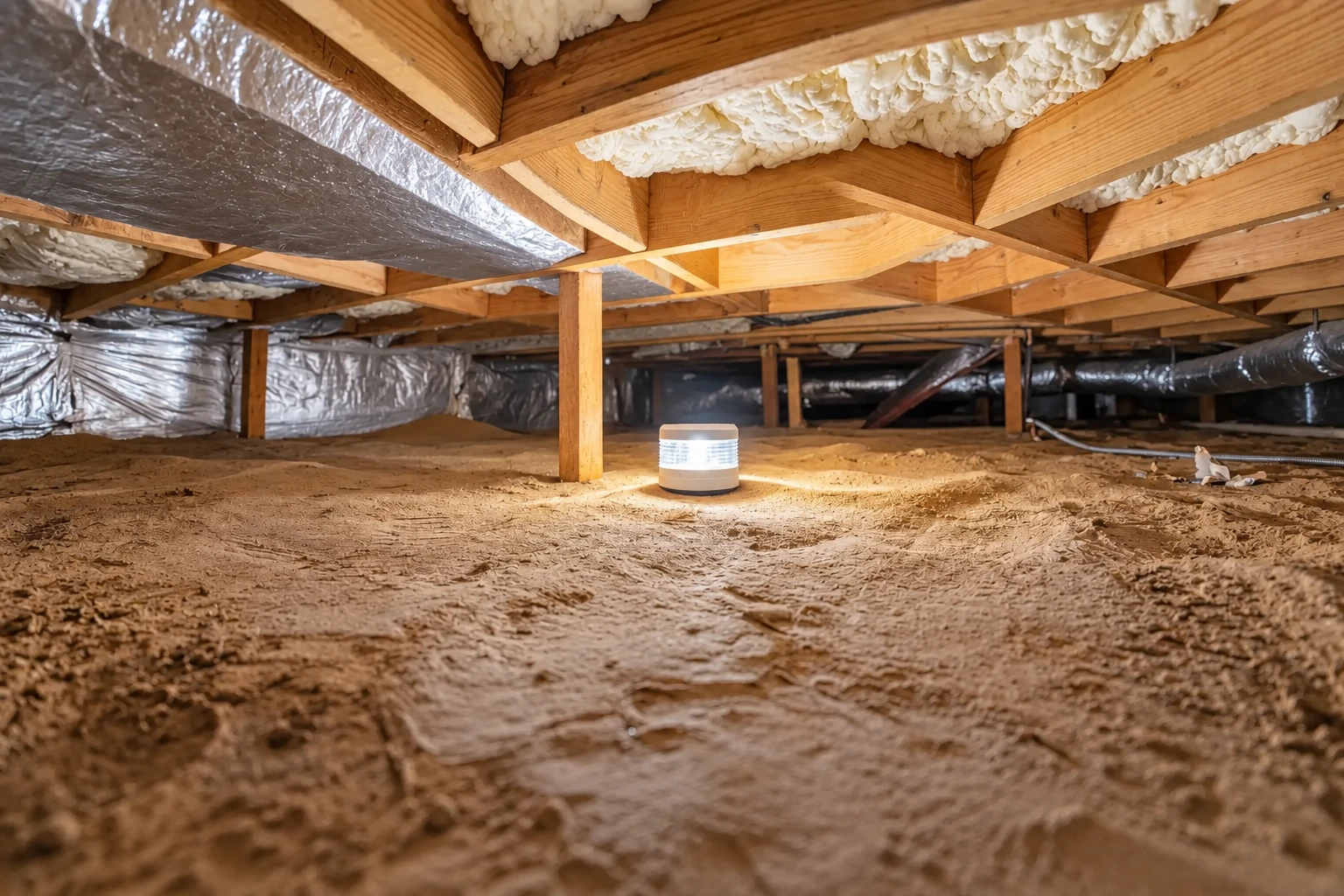
Attics where the ductwork lives
Foam costs more than loose fill, so in most attics, sealing the gaps and topping up the loose fill wins. When the ducts run up there, foaming the roofline keeps them inside and is worth it.
Drafty rooms, a hot upstairs or noise through the walls? We fill the gaps with open-cell foam so the house holds heat and quiets down.
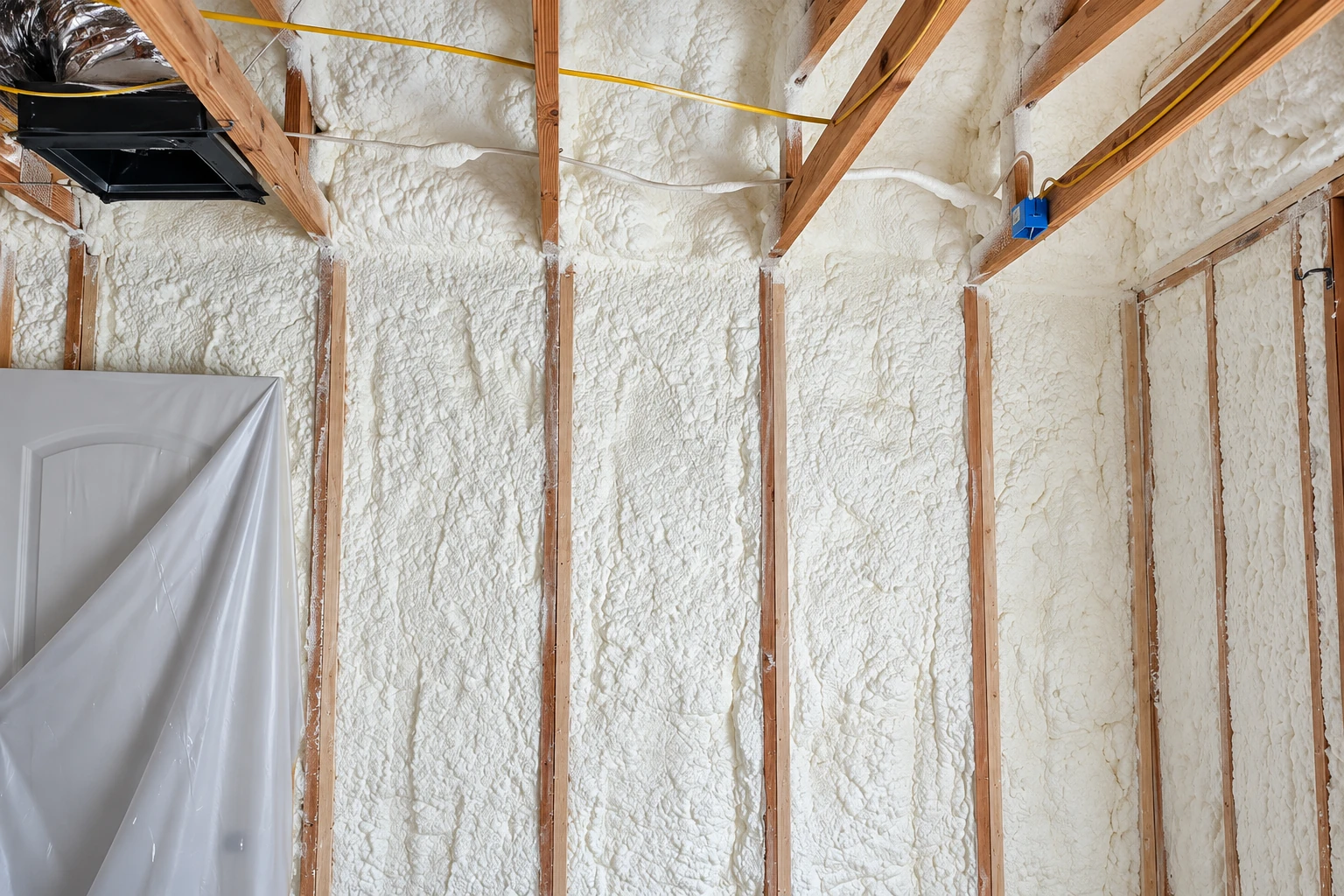
Open-cell foam insulation is a soft spray foam our crew applies to attic rooflines and walls in Springfield, IL and across central Illinois, where it expands into the gaps to stop drafts and quiet noise.
If the upstairs bakes in July, the room over the garage never warms up or the power bill keeps climbing, the air is usually getting in through gaps whoever built the place didn't bother to close. The price depends on how much area we're covering, how thick the foam goes, how easy the space is to reach and whether old insulation has to come out first. The schedule depends on that prep plus the time your family spends away while the foam cures. I give you your own figure after I've looked at the space. We're licensed and insured, and we check permit rules with the office that covers your address before any job starts.
I come out for every estimate myself and look over the attic, walls or crawl space before we price anything, so your number comes from your house and not a guess over the phone.
Fresh foam over insulation that's been soaked or full of droppings just seals the problem in. If yours is like that, it comes out before we spray, and I'll tell you so up front.
I spent years in attics and crawl spaces for a property management company before starting this business in 2017, so I've seen most of the ways a house gets insulated wrong.
I come out first and look over the attic or walls, because foam sprayed over a roof leak or a damp spot only hides it for a while. Open-cell is good at stopping air and quieting noise, but it isn't the answer for every roof or wall, so we talk through where it fits and whether some sealing and a top-up of loose fill would do the job for less. Before we put you on the schedule, I ask whether anyone at home has asthma, allergies or skin trouble, since people with those may be better off with a different material. On the day, our crew closes off the area we're spraying and covers the heating and cooling vents so the foam stays where it belongs. Then we spray the roofline or wall cavities, trim the foam back flush and clean up before we leave so the house can air out.
Moisture from a damp crawl space doesn't care what's in the walls above it, so if yours is wet, a crawl space vapor barrier comes before any foam. Landlords and property managers who knew me from the old job call about rentals and small buildings too, and that's our commercial insulation work.
Foam costs more than loose fill, so in most attics, sealing the gaps and topping up the loose fill wins. When the ducts run up there, foaming the roofline keeps them inside and is worth it.
That room sits over cold air with a roof close above it, and the framing usually has corners loose fill can't reach. Foam fills those odd spaces and stops the drafts behind the cold floors.
Open-cell is soft and fills the whole cavity, so it usually takes a good bit of sound out of a wall between a bedroom and the living room or an office and the kitchen.
Every hole drilled for a pipe or wire leaks air. Foam seals those openings while it insulates, which is the step that gets skipped when someone rolls in batts and calls it done.
Send the form and we'll reply within one business day to set up a visit. I come out, look over the space and give you a free estimate on site, with no obligation to book.
Let us know whether it's the attic, the walls, the room over the garage or all three, so I come out ready to look at the right spaces and ask the right questions.
If foam isn't the right call for your roof or walls, you'll hear that from me. I'll also tell you what would work better and what has to be fixed first.
Our crew does the install, and I'm on most jobs or checking them before we leave. Our work is satisfaction guaranteed, and that check is part of how I keep it that way.
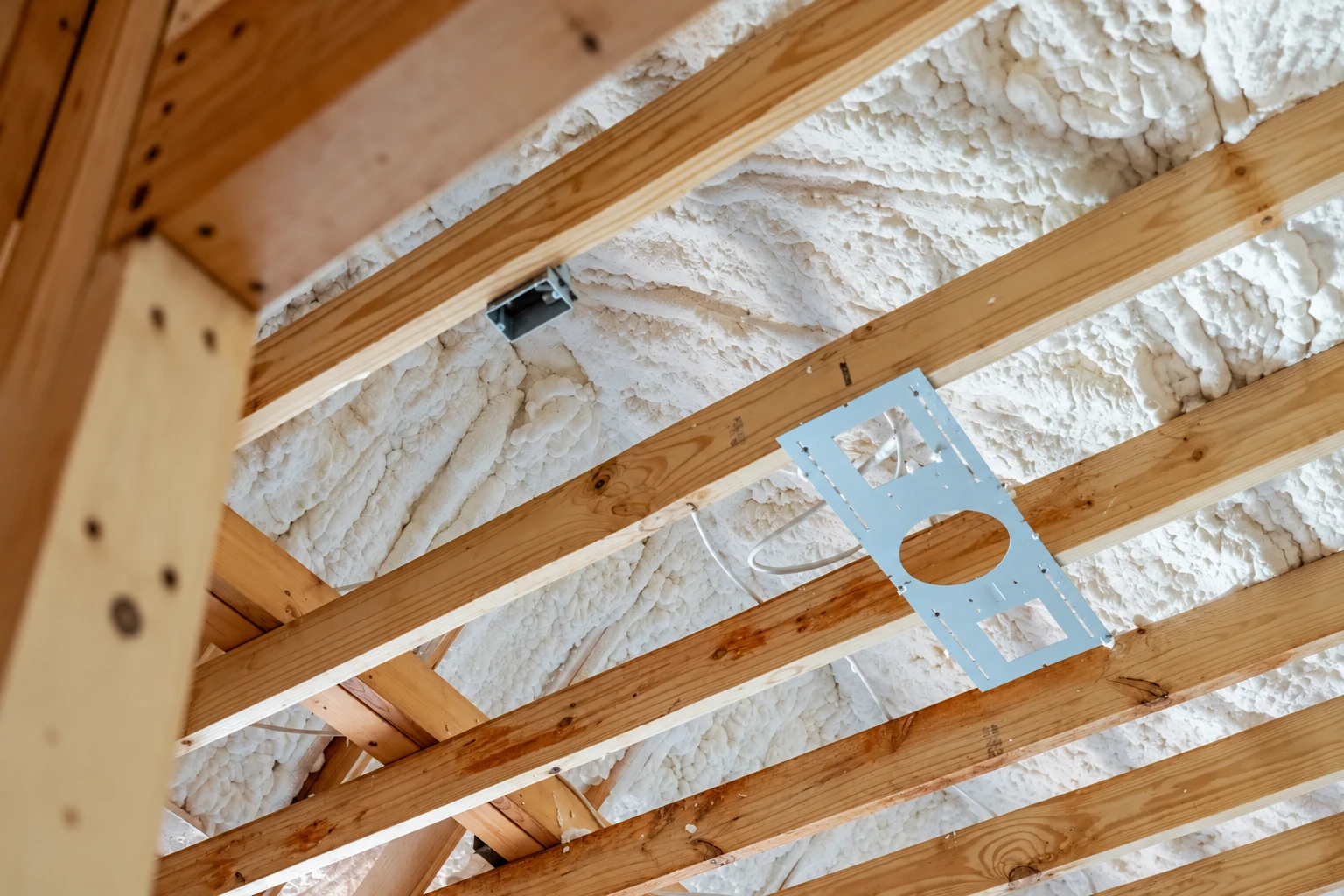
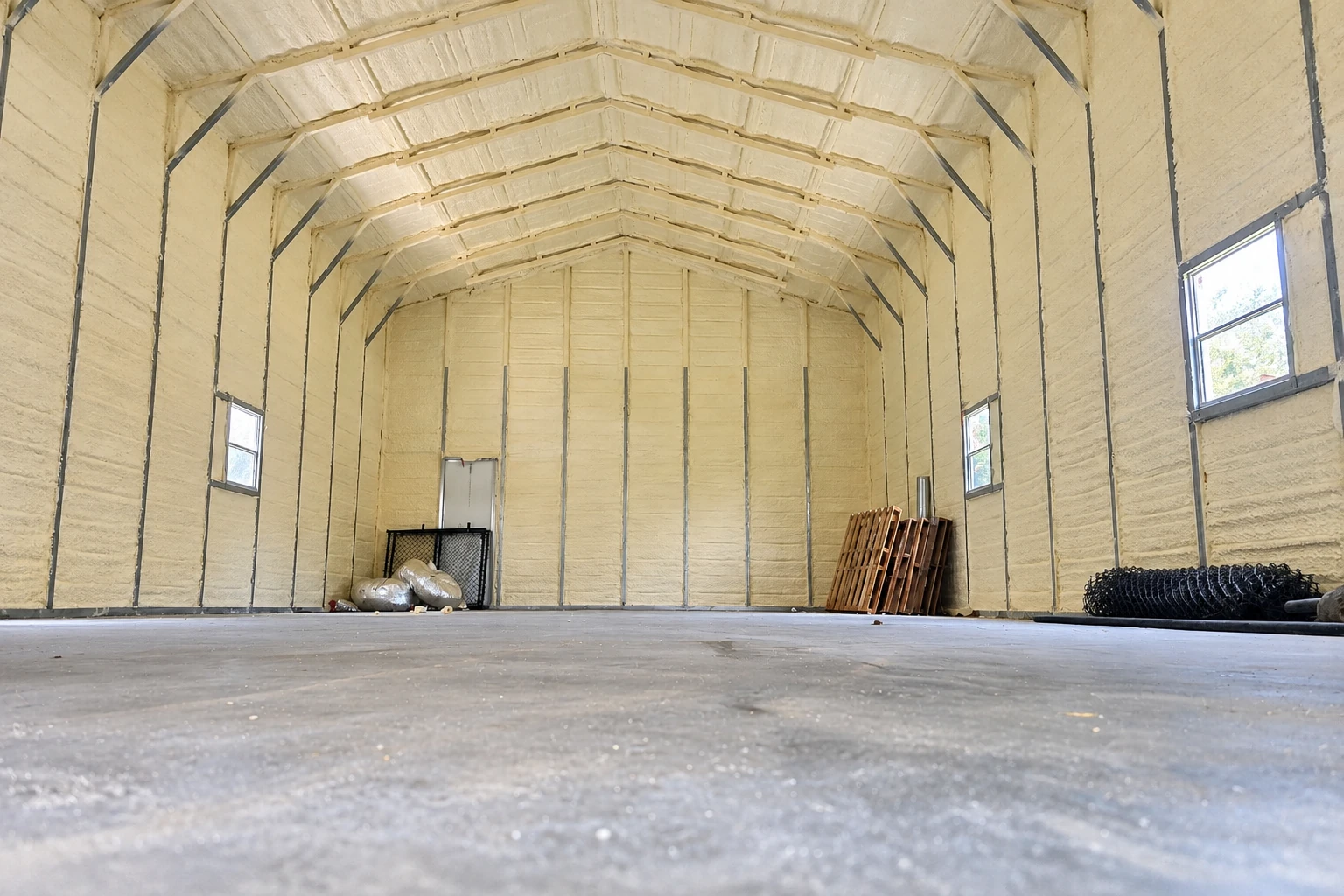
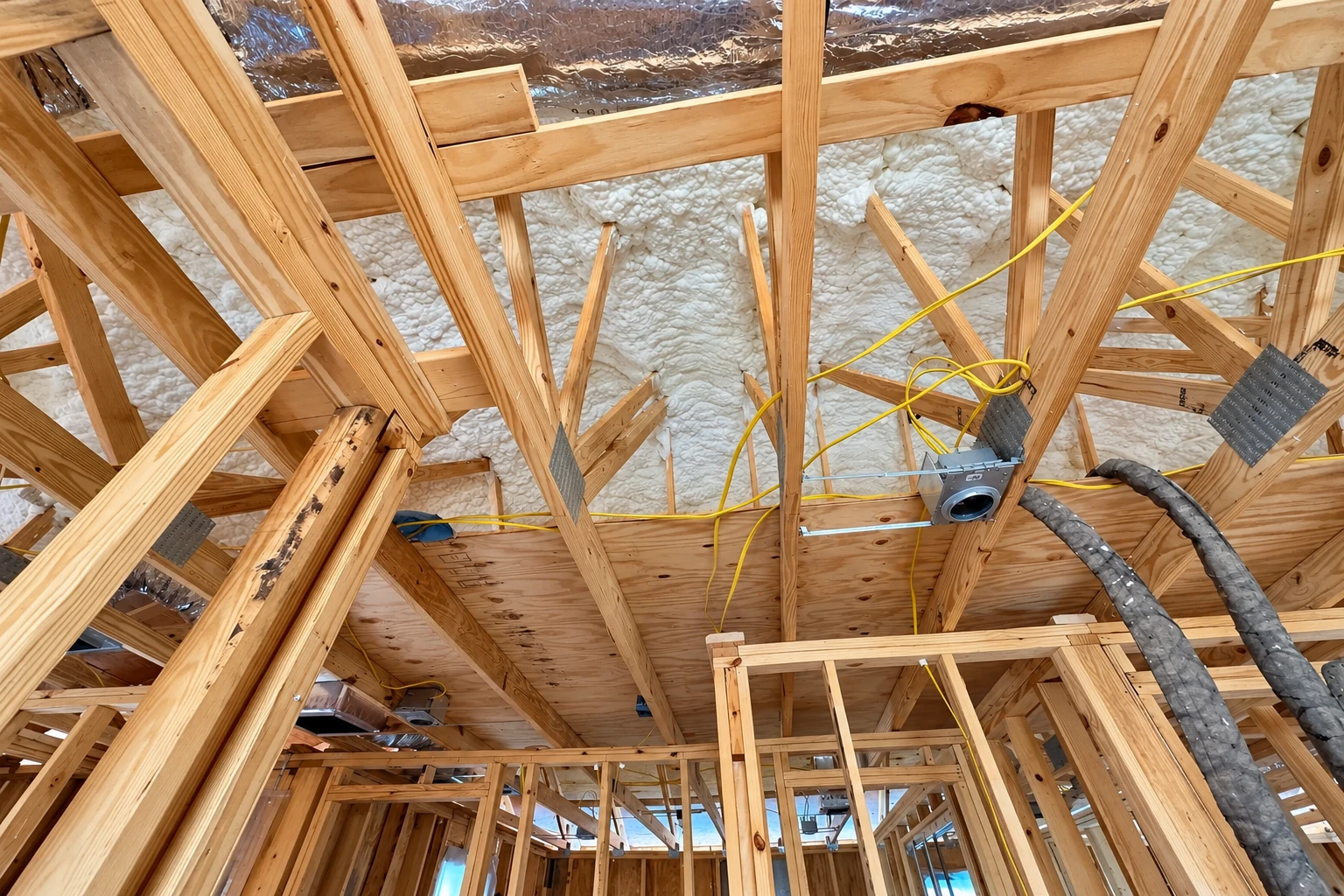
These photos show open-cell foam on roof decks, in wall cavities and trimmed flush with framing, so you can picture the options we'll talk through.
Here are plain answers to what Springfield homeowners ask most about open-cell foam, from picking a foam to how long you'll be out of the house.
Open-cell is the better pick when you mainly want to stop air and noise, and closed-cell wins where moisture is the worry. Open-cell gives about R-3.6 per inch, a measure of how well it slows heat, and lets moisture vapor pass. Closed-cell gives about R-6 per inch, is rigid and nearly blocks vapor.
It can, but your climate zone decides it. One building science guide says either foam can go under the roof deck to bring the attic inside the heated and cooled space, and both work in most climates. The same guide says only closed-cell should be used in Climate Zones 5 and higher. For walls, it pairs open-cell with an interior vapor retarder to control condensation.
Plan on at least 24 hours away from home, and longer if the foam hasn't finished curing. The house also needs to be aired out and cleaned before you come back. The safe time varies with the product, the house and whether young children or older relatives live there, so ask us about your household before you book a place to stay.
Usually yes, if the foam will be left showing in a space people use. One maker's data sheet says its foam should be covered by a thermal barrier, which is a protective layer, or by another material the building code allows. If you're finishing that attic or basement room, the covering belongs in the plan from the start.
Permit applications in the city go to Springfield's Building & Zoning Department. Its list names building, roof, fence and similar work, but not insulation, so ask that office about your job. The city's Building Division answers questions about which code rules apply. If a permit is needed, we take care of it.
Our phone hours run seven days a week into the late evening, so call (217) 210-0709 or send the form with the rooms you want done.