A plain ground cover
Plastic over the dirt, with the wall vents left as they are. It's the smaller job and the smaller bill, and it fits a crawl space that stays fairly dry.
Musty smell or damp dirt under the house? We cover the crawl space floor so less ground moisture rises into your home.
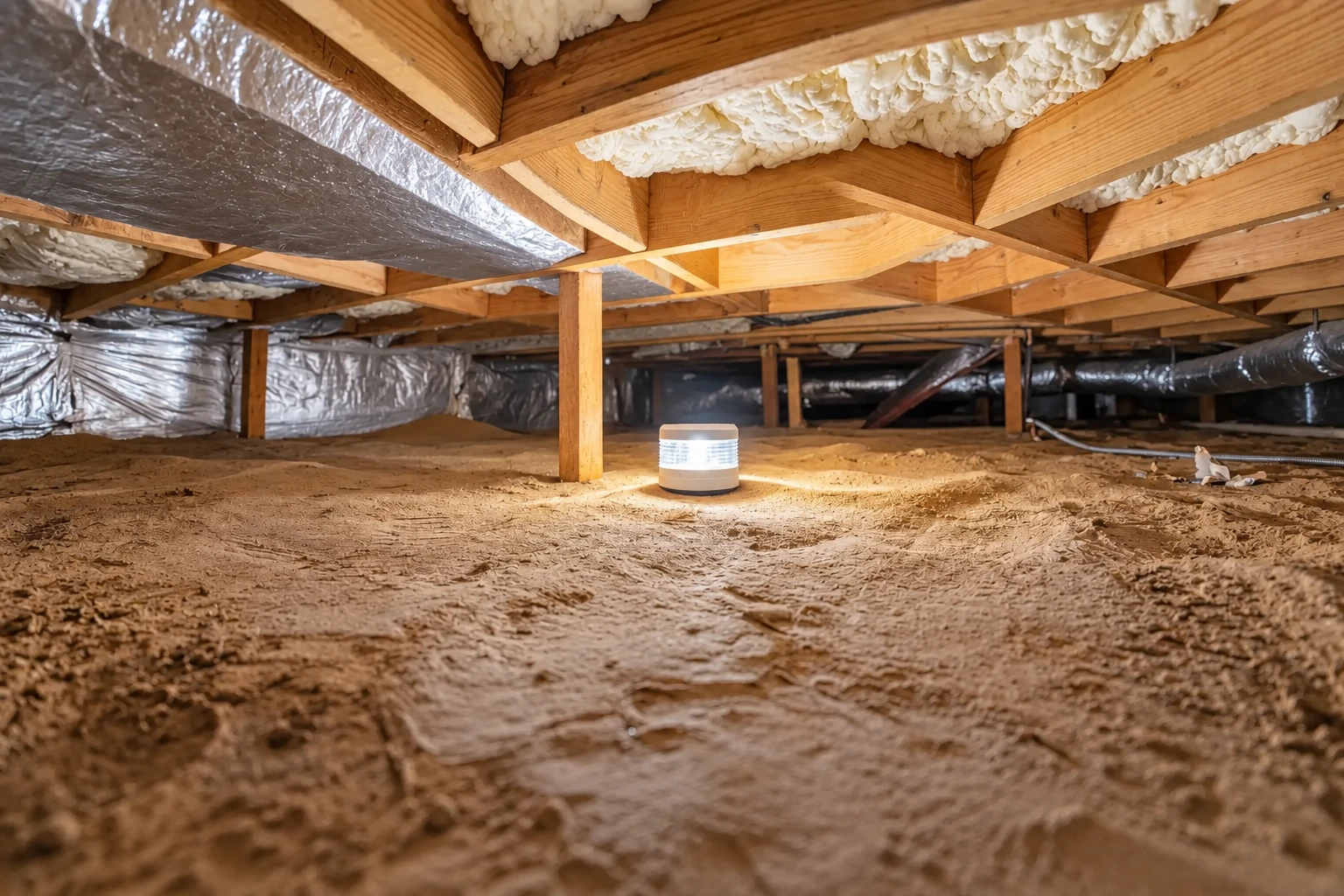
A crawl space vapor barrier is plastic sheeting we lay over the bare dirt under houses in Springfield, IL, so less ground moisture rises into the crawl space and the floors above it.
Usually it starts with a musty smell in the hallway, or a furnace tech crawling back out to mention that the dirt down there is wet. Your price turns on how big the space is, how much room there is to crawl, whether you want a plain cover or a fully sealed crawl space with a dehumidifier, and how heavy a sheet it needs. The schedule turns on whether water has to be dealt with first and how quickly the stored stuff comes out. Your estimate puts a number on all of that for your house.
I come out for every estimate myself and look over the whole crawl space first, so the price covers the ground that's really there and isn't a guess made from the hallway.
Plastic laid over a wet crawl space just hides the problem for a while, and I've cleaned up enough of that. If your space isn't ready yet, I'll tell you to wait.
Before anything goes down, I check that the crawl space is dry and cleared out, since the sheet has to lie on the ground to do its job. Then our crew rolls it out over as much ground as we can reach, working it around the piers and into the corners the builder clearly never expected anyone to visit. We pick a sheet tough enough for whoever has to crawl through after us, whether that's your furnace tech or a plumber dragging a toolbox. On a sealed job we also seal the seams and the spots where pipes come through, and I'm either on the job or checking it before we pack up.
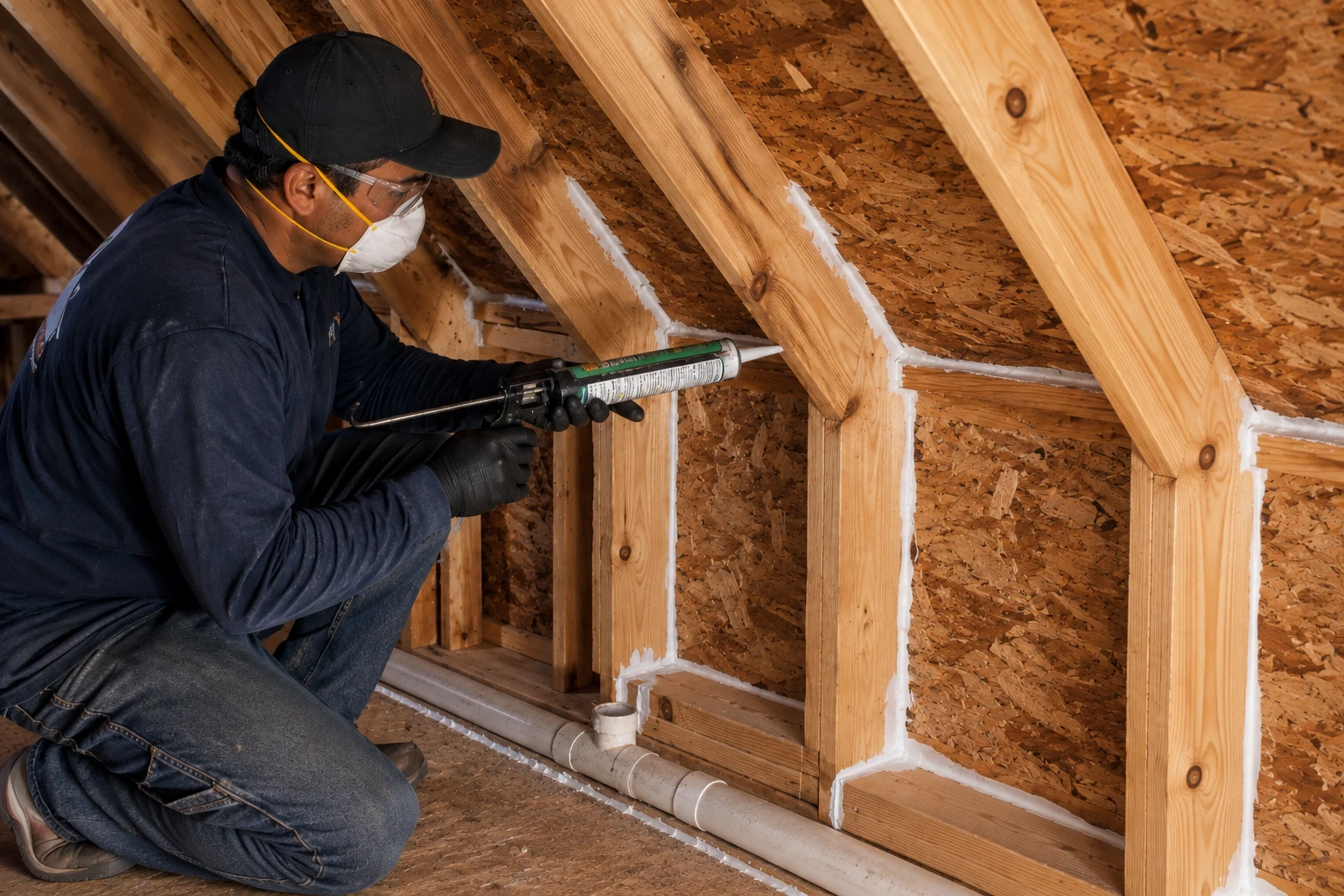
The ground cover is one piece of keeping a house dry. If you need plastic somewhere other than the crawl space floor, like a basement wall or behind new insulation, that's our vapor barrier installation work. Damp air from below tends to work its way up through the house, so it pays to look at the top too, where attic air sealing closes the gaps around lights, pipes and the hatch before any insulation goes on.
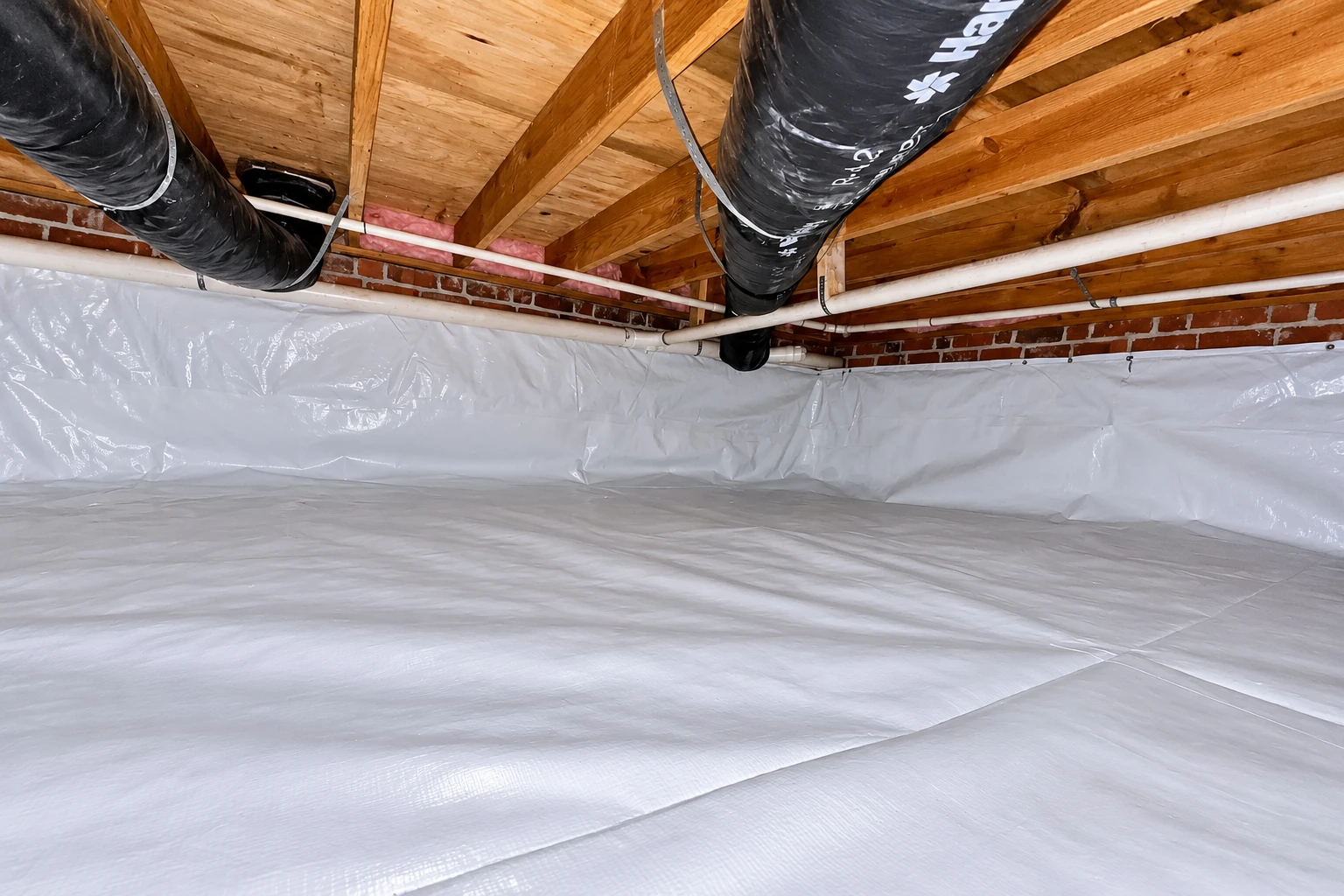
Plastic over the dirt, with the wall vents left as they are. It's the smaller job and the smaller bill, and it fits a crawl space that stays fairly dry.
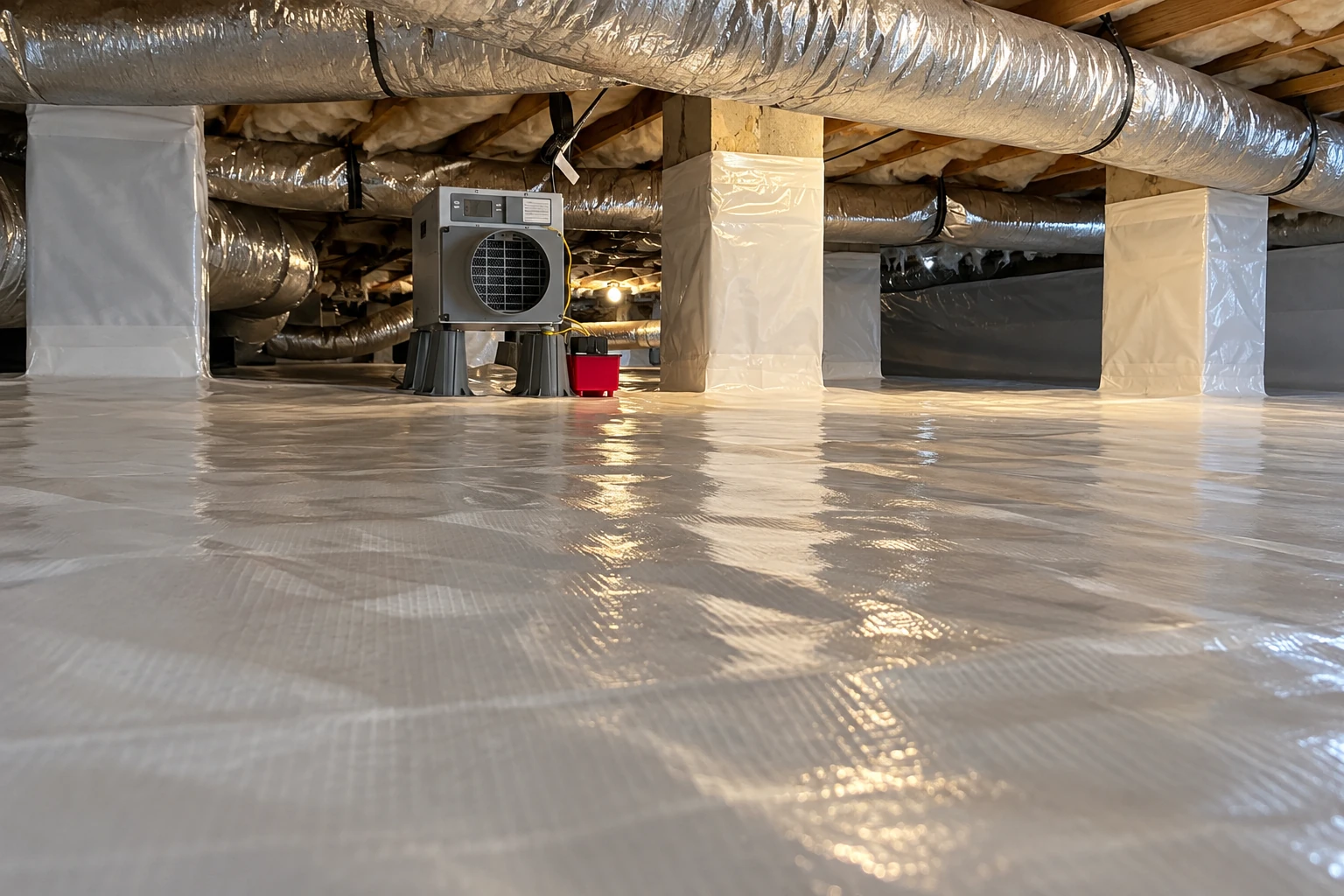
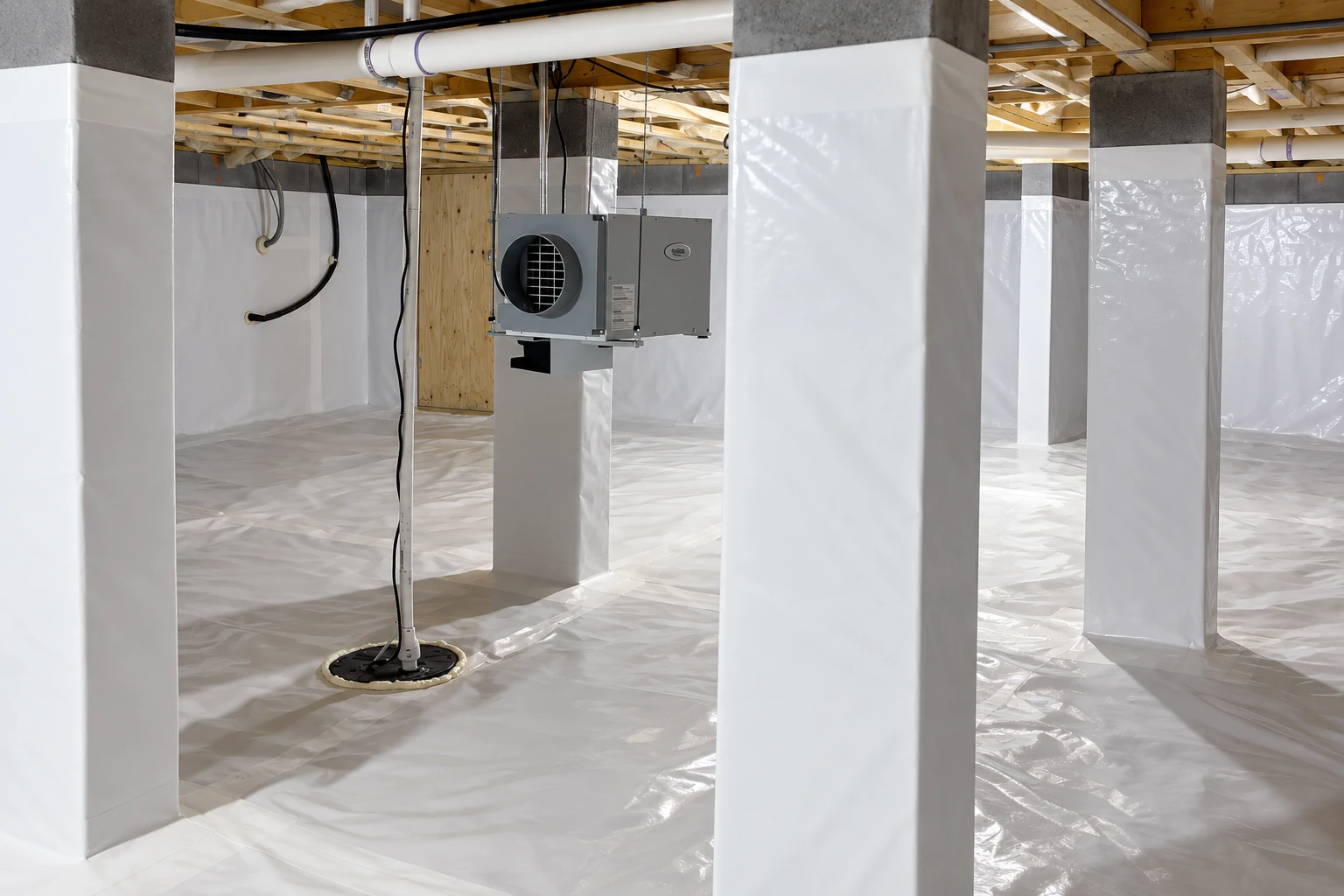
The sheet covers the floor and runs up the walls, sealed all the way around, with a dehumidifier drying the air. Dryer, kitchen and bath vents some builder ran down there get rerouted outside.
Basic sheeting tears under knees and toolboxes unless it's protected where the techs work. Thicker, reinforced sheeting holds up when someone's down there every year, so that's what we'd put in.
A sealed crawl space counts on gutters carrying roof water off and ground that slopes away from the house. If water pools at your foundation, that gets fixed before any plastic goes down.
Send the form and we'll reply within one business day to set a time. I come out, crawl the space and give you a free estimate on site, with no obligation to book.
A furnace, water heater or ductwork in the crawl space changes which sheet we use, because someone will be crawling over that plastic every time the equipment needs service.
That's our promise on every crawl space we cover. If something about the job doesn't sit right with you afterward, call the same number and tell me about it.
Homeowners call us, and so do landlords and property managers who knew me from my years doing property upkeep, so a crawl space under a rental is nothing new to us.
These photos show plain ground covers, sealed crawl spaces and sheeting weights you can talk over with me at the estimate.
Here's what Springfield homeowners ask about covering a crawl space, from what the plastic does to what a sealed system costs.
A well-installed vapor barrier helps to minimize the ground moisture and soil gases, such as radon, that rise from the dirt under your house. It isn't a radon system, though. Illinois licenses the people who test for radon and fix it, and the state's radon program explains the risks and how to bring levels down at home.
For moisture, usually yes. National guidance says that in temperate, humid climates a properly closed crawl space can control moisture much better than one with open wall vents. It costs more because of the sealing and the dehumidifier, so I'd pick it when the space stays damp or holds your furnace and ducts, and a plain cover when it doesn't.
Crawl space encapsulation with a vapor barrier and a dehumidifier usually runs about $5,500 to $10,000 per job in Illinois. That's a statewide estimate for a fully sealed system, not our price, and a plain ground cover is a smaller job. Your figure comes after I've seen the size, the clearance and whether water needs fixing first.
Clear out whatever's stored in the crawl space, along with any loose junk the last owner left, so the plastic can cover the ground completely. If you have a pest treatment or warranty, call your pest company before we start, so our work doesn't get in the way of theirs or affect that warranty. We handle the rest.
The city's permit list doesn't settle it. Springfield's Building & Zoning Department issues permits, and its list names work like building, roofing, fences and floodplain jobs, not vapor barriers. The city builds to the International Residential Code, the model code for houses. We check with the office that covers your address before we start, and if a permit is needed, we take care of it.
We pick up until 11 PM on weekdays and 10 PM on weekends, so call (217) 210-0709 tonight or send the form.